



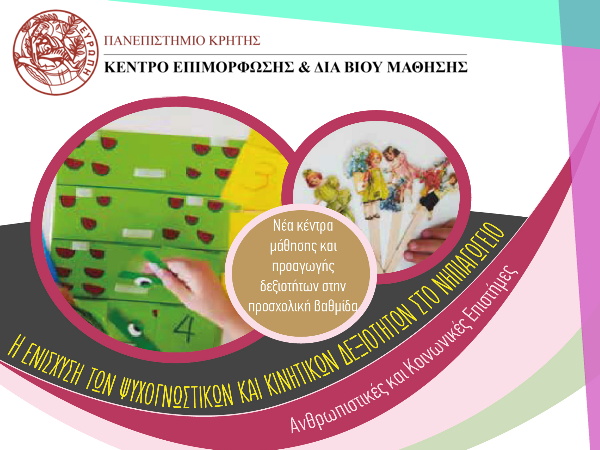
Fine motor skills are crucial for the holistic development of preschool children. By improving the small muscle movements of their hands and fingers, children acquire basic skills such as writing, dressing, and using tools. In addition, motor skills are directly linked to their cognitive and linguistic development and are essential prerequisites for success in the educational process and in their social life. Fine motor skills are related to a number of important (executive) functions that enable us to plan, organize, initiate, and complete tasks. Furthermore, it appears that learning processes in which the body is actively involved have a significant impact on early language development and are considered superior to learning processes that do not involve the child’s body. Consequently, preschool children need daily practice with developmentally appropriate fine motor activities so that they can successfully approach their later school literacy, build their self-esteem, their autonomy, and, most importantly, the skills they will need later in life.
This book combines theoretical analysis and practical activities, offering valuable suggestions for parents and teachers who want to strengthen the fine motor skills of their children and/or their students. With rich material based on research and experience, it sparks important pedagogical considerations in the direction of strengthening children’s fine motor skills, which in turn serve as a fundamental foundation for the development of their autonomy (cognitive, emotional, motor), enabling them to explore the world around them with confidence and creativity.